Mastering AI with ERP Systems: Proven Strategies, Smart Architecture & Real ROI
Summarize and save time
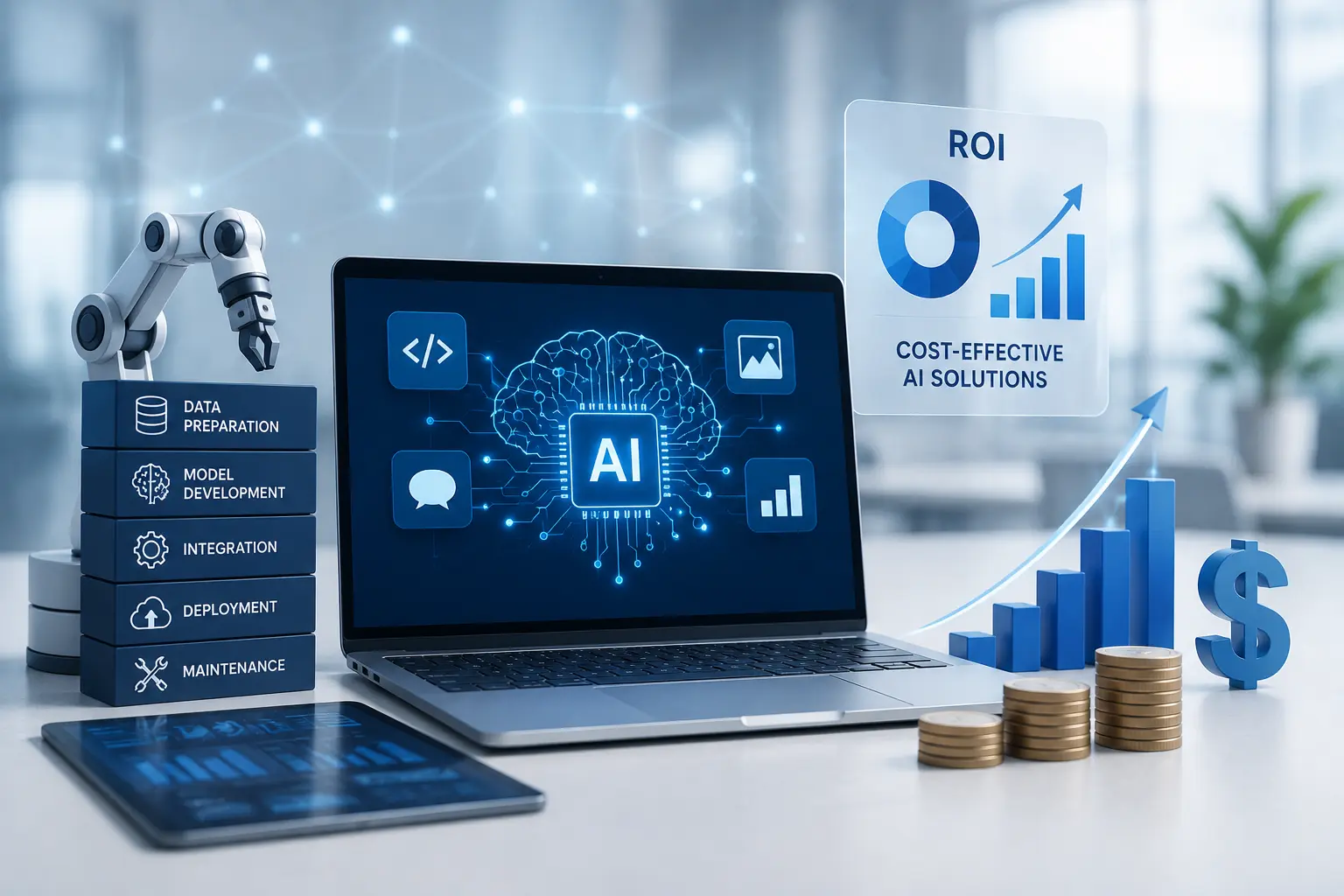
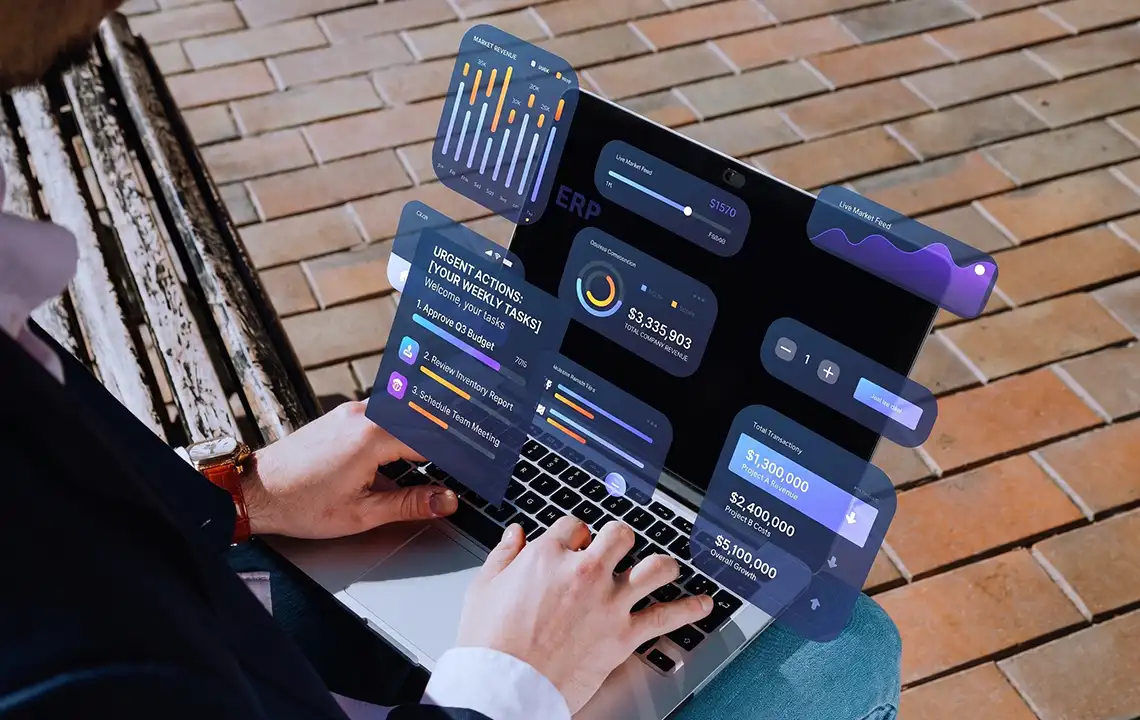
The journey of AI has evolved from a mere buzzword to an engine driving how businesses plan, operate, and execute solutions. In the shift from nice-to-have to must-have, AI-powered ERP systems have gained prominence. These systems are not rigid anymore; they can predict, adapt, and get sharper over time.
Consider AI with ERP systems as an advanced software that oversees your daily business operations for agile decision-making, keeping costs down, automating redundant tasks, improving efficiencies, and identifying opportunities that can turn into a competitive advantage.
This generation of intelligent ERP solutions is leading the digital transformation shift. Get rid of slow forecasts, manual data entry, scattered reports, etc. With AI in ERP. Partner with top-rated enterprise AI development companies like Prakash Software Solutions (PSSPL) for crafting AI-enabled ERP systems with state-of-the-art technology.
Key Takeaway
The ERP (Enterprise Resource Planning) industry is moving towards an AI-powered future, with a market projection of $28.5 billion by 2030.
According to IDC, by 2027, about 75% of global businesses will replace monolithic ERP systems with modular API-driven systems.
AI in ERP systems can reduce 20% - 40% processing time on average.
Companies using AI with ERP systems report 15% - 30% cost-saving.
According to Gartner, 62% of the ERP application spending will include AI-enabled solutions by 2027.
Expert Insight
"The reason most AI projects stall isn't the technology; it is because they have been developed outside the ERP environment, when what works is developing within the ERP, creating the architecture for direct insight-to-workflow connections, and assessing success based on business results rather than model performance benchmarks. Once the ERP processes have been augmented with artificial intelligence, there is no need for pilot programs anymore. The business is now smarter from the inside out."

In this blog, let’s understand the strategies, architecture, and ROI of Artificial Intelligence in ERP systems.
Why Integrate AI with ERP Systems?
First things first, let’s clear the definition of ERP before we proceed with the specifics of AI integration.
Enterprise Resource Planning (ERP) systems handle day-to-day business operations with integrated software applications. From finance, human resources, to supply chain, and other business functions, ERP systems play a pivotal role because they integrate all vital business processes into one platform that operates on a single codebase. Implementing ERP systems can improve your business operations by:
- Streamlining business processes
- Enhancing operational efficiency
- Standardizing operations for greater data security
- Increasing data visibility
When ERP systems alone can be such a valuable addition, the integration of AI with ERP systems will skyrocket the efficiency of your business operations. Let’s understand this shift from traditional ERP to intelligent ERP.
Traditional ERP systems serve as a powerful data repository, but with one significant limitation: they require human oversight. These systems take care of everything from capturing transactions to preparing historical records. However, converting this data into actionable intelligence demands human interpretation.
On the contrary, AI with ERP systems facilitates smart automation by integrating analytical AI into every layer of the workflow. This empowers the system to use the insights, recommend actions, and execute decisions in real-time.
Now, you see why AI in ERP is a chasing trend. It creates a profound impact by handling heavy analytics and leaving time for humans to focus on strategic management. Decisions that used to require hours of human analysis can now be made within seconds. Key components of AI-powered ERP systems include natural language processing, predictive analytics, machine learning, generative AI, and robotic process automation. While some businesses might choose to integrate AI in their existing ERP systems, others might opt for the implementation of ERP platforms with built-in AI functionalities.
Several examples of AI with ERP systems include:
- Automating invoice processing, purchase order approval, and other time-consuming tasks.
- Scheduling preventive maintenance for predicted equipment failure.
- Optimizing supply chain with real-time route optimization, demand forecasting, etc.
- Automating regulatory compliance and reporting processes.
- And many more
Strategic Roadmap for AI with ERP Systems
An AI ERP integration operates on 4 distinct layers:
(1) Automation Layer
This is the stage from data entry to self-execution. Machine learning and robotic process automation eliminate repetitive manual input tasks to accelerate cycle time and accuracy. Clean and structured data pipelines feed real-time data to AI models from ERP modules.
Using AI with ERP systems in this layer frees the employees to focus on analysis rather than routine transactions.
(2) Insight Layer
This is the transition from reporting to real-time prediction. The insight layer replaces backward-looking reports with predictive intelligence. The ERP data is combined with external insights to forecast future outcomes, monitor performance in real-time, and identify any discrepancies that might affect business operations.
(3) Decision Layer
This is the stage from reactive management to proactive planning. The embedded AI models in ERP modules give pricing recommendations, suggest procurement timing, and schedule maintenance tasks based on evolving market dynamics. This layer augments human judgement with real-time recommendations to transform ERP into a co-pilot.
(4) Experience Layer
This is the stage from a static interface to a conversational ERP. AI with ERP systems reshapes the way employees interact. Personalized interfaces help drive higher adoption rates, and the loop finally closes with AI outputs triggering workflow back into the ERP.
Core Architecture for AI with ERP Systems
The integration of AI with ERP systems often fails due to the lack of tech readiness. It’s essential to evaluate your existing tech stack and strategize before starting to code or implement any technology.
The foundational checks that your organization must complete include:
(1) An AI Maturity and Readiness Assessment
This assessment evaluates your business based on 5 aspects:
| Data quality |
| Standardized processes |
| Talent skills and potential |
| Openness to change and adapt |
| Infrastructure readiness |
(2) Outlining the Business Outcomes
Implement this outcome-first framework to clearly define the scope of AI with ERP systems:
| Determine the specific function |
| Calculate current cost |
| Define KPI that will change |
| Map specific AI technologies |
| Identify the ERP modules, tables, and APIs involved |
(3) Ensuring Data Governance
AI relies on data, which is why smart AI-powered ERP systems need valuable data. Bad or inconsistent data can result in wrong predictions, such as overstocking items that are not in demand anymore. Ensure weekly accuracy data checks and restrict who can view and edit records to avoid messing around with numbers.
The following data quality traits are essential for AI with ERP integration:
| Data Quality | Details Needed |
|---|---|
| Completeness | Ensuring all vital details are mentioned, such as transaction date, quantity, category, and other details. |
| Consistent | Standardized data in terms of format, units of measure, etc. |
| Accurate | Auditing and refining historical data for the targeted AI use case. |
| Timely | Real-time AI data models require real-time data pipelines. |
| Lineage | A document stating where the data originates from and how it transforms across your tech stack. |
(4) Selecting the Right Architecture for Integration
Your technical architecture lays out the foundation for AI-ERP integration. Several architecture patterns suited for different use cases are stated in the table below:
| Architecture Pattern | Suitable For |
|---|---|
| API-first integration | Cloud-native modern ERP environments |
| Event-driven architecture | Real-time AI data streaming |
| Middleware Layer | Multi-module or legacy ERP systems |
Top 7 Proven Strategies of Integrating AI with ERP Systems
When considering AI with ERP systems, you must consider careful planning and the right implementation approach. Without proper preparation, a lot of businesses rush into executing the project, resulting in high-cost overruns and failed deployments.
To get started, here are a few proven strategies that will help:
(1) Assess Current Business Processes
No design, implementation, or integration is possible without an assessment of the pain points. Document the challenges and the existing workflow to map out the redundant tasks that need to be automated.
Assess the data flows between the departments to reduce employee time and identify the AI features that can add optimal value to your existing or newly designed ERP system.
(2) Define Clear AI Use Cases
Identify the specific problems that you want AI-ERP to resolve and build purpose-specific data pipelines for each AI use case. Don’t make the mistake of implementing all AI features simultaneously; start small with high-impact areas to deliver quick big wins.
Some widely popular use cases of AI consulting services in New York include:
- AI-powered ERP systems monitor the IoT-enabled equipment and assist ML models to predict project failures before they occur. This reduces unplanned repair costs and reduces downtime.
- AI with ERP systems analyzes diverse real-time data sets to deliver predictive demand forecasting with fewer stockouts, reduced inventory costs, and increased working capital efficiency.
- Enterprise AI development companies help analyze user behavior within the ERP platform and provide a personalized user experience with customized dashboards, reports, and recommendations.
- Built with Generative AI, NLP, and Conversational AI, ERP-integrated chatbots understand human queries and render automated, transactional assistance.
- AI with ERP systems also offers complete visibility in the supply chain with real-time analysis, IoT integration, and predictive modeling.
(3) Evaluate the Data Quality
AI tools with ERP integration require clean, structured, real-time, and relevant data to operate correctly. Audit the existing data systems and sources to ensure consistency and completeness. Poor data quality can undermine even the most effective AI-powered ERP systems. Plan proper data cleanup activities before the design and implementation phase begins.
(4) Select the Right AI ERP Vendor
Research AI software development companies in Texas with proven AI expertise in your industry. Request them to give demos that reveal AI functionality in real business scenarios. Also, review customer references and testimonials to validate their performance. Evaluate their experience in implementing zero-trust security architecture, ensuring constant model monitoring, and building modular, scalable AI architecture.
(5) Start with A Pilot Program
Before real-world execution, test the AI ERP implementation in one department or business unit. This testing and limited scope will reduce risk in the future and allow you to test AI features in real-time.
Garner user feedback in the early stages as often as possible and use the results of this pilot program to refine your AI with ERP systems before company-wide rollout.
(6) Train Your Team
Invest in proper training sessions for the technical team as well as the end users. AI-enabled ERP systems demand distinct skills in contrast to traditional ERP systems. It’s therefore important for you to plan for ongoing education beforehand so that the team can embrace the AI evolutions. Consider hiring AI engineers from leading AI development companies like Prakash Software Solutions for seamless AI ERP implementation.
(7) Monitor and Optimize Performance
Once the AI with ERP systems goes live, it’s time to test the water. Monitor the system’s performance, user adoption rates, and AI feature effectiveness. Fine-tune the AI algorithms based on the real-time performance analysis reports and ensure maximum value from your AI ERP investment with consistent improvements.
Tracking ROI in AI with ERP Systems
You must track real value from your AI-ERP integration, and to see this payoff, you must measure 3 specifics before and after launch:
(1) Cost Savings
Log the manual work hours in terms of the hours spent on inventory count and sales forecast. Pull the reports from the ERP dashboard and evaluate the hours and dollars saved yearly per store.
(2) Speed Gains
Keep a note of how long reports take before and after the AI-ERP implementation. AI can deliver faster insights in minutes, and that in turn results in quick restock and reduced sales costs.
(3) Accuracy Boost
Traditional forecasts often guess wrong when it comes to tracking stockouts or overstock. AI gives accurate predictions by analyzing the yearly sales reports, seasonal trends, and market shifts in demand and supply.
AI spots what is really driving the demand and provides accurate predictions instead of rough estimates that you can rely on. Turn hope into solid wins with AI-ERP accuracy.
Overcoming Challenges with AI Consulting Services in New York
AI with ERP systems often comes with several challenges that the ERP users don’t have to deal with directly, but when things go haywire, they feel the impact through business outcomes.
- Duplicate or bad code can damage the model’s accuracy, which is why even the best AI features can fail to deliver.
- Computing and licensing surcharges can add up to the fees for accessing an AI assistant for each user.
- A cultural shift in the mindset and training session is often very important before the implementation of AI with ERP systems. This is to help users understand the systems and trust automated suggestions.
- Integrating third-party AI tools or switching vendors can be challenging because of the dependence on closed APIs and ecosystem-specific models.
- Historic training data might follow outdated patterns and make forecasts accordingly, unless it’s refined and audited from time to time.
Next Steps for AI with ERP Systems Success
The evolution of AI with ERP systems is gradually shifting from assisted automation to autonomous decision-making. Ensure workflow optimization without any human micromanagement with well-connected ERP ecosystems. 3 trends that are set to shape a promising future for AI-ERP integration are:
- Agentic AI
- Generative + Predictive AI
- Connected intelligent ecosystem
If your ERP is following the past data insights, it’s time to switch to AI-powered ERP systems that can predict the future. Connect with Prakash Software Solutions, a reputed company offering exceptional AI software development services in Texas. Unlock the optimal potential of AI with ERP in ensuring governance, scalability, compliance, constant learning, and cross-platform intelligence.
- Enterprise AI + ERP
Is your ERP still stuck in the past?
By 2027, 62% of ERP spending will include AI-enabled solutions. Don’t let legacy systems hold your business back.
40%
Reduction in processing time with AI-ERP
30%
Cost savings reported by AI-ERP users
$28.5B
AI-ERP market size projected by 2030
Dhanashri Dimke is a literature graduate-turned technical content writer and copywriter with 4 years of experience crafting clear, persuasive, conversion-focused content. She writes emails, articles, blogs, whitepapers, and social copy for tech and business clients, turning complex ideas into stories people want to read. Partnering with product teams and marketers, she shapes content that drives real results. Writing is her genuine passion, and Pride and Prejudice remains a lifelong favourite.