
How Dynamics 365 Business Central Helps Food & Beverage Businesses Grow?
Summarize and save time
Running a food and beverage business means keeping multiple moving parts in sync. From ingredients and inventory to suppliers, production, orders, and constantly changing customer demands, there’s always something that requires proper attention. As your business expands, keeping track of everything becomes difficult, especially when most of the teams rely on spreadsheets or disconnected systems to manage day-to-day operations. Small gaps in information can quickly turn into stock issues, unnecessary wastage, delays in orders, or costs that are difficult to pin down.
This is where having one connected system makes all the difference. Microsoft Dynamics 365 Business Central brings finance, inventory, purchasing, sales, warehousing, and production together, giving teams a clearer view of what’s happening across the business. It helps replace scattered information with connected processes, making everyday decisions easier and giving growing businesses more room to move.
So, what can Business Central actually do for a growing food and beverage business?
When Growth Makes Operations Harder to Manage?
Attracting new customers, expanding operations, and establishing your brand can help your business capture more market share in your target areas. More growth means more customers to serve, products to manufacture, suppliers, collective orders, and outlets.
This also means more information to manage and more decisions to make. Things working efficiently for a small-scale business often become difficult to maintain as volumes increase rapidly.
For food and beverage businesses, the challenge is even bigger. Inventory may have a limited shelf life, demand can shift with seasons or promotions, and products often need to be tracked by batch or lot.
At the same time, teams need to keep purchasing, production, warehousing, sales, and finances aligned. Managing these processes via separate systems or through manual work makes it tougher to get a clearer picture of what’s happening across the business.
The end result? Teams often spend more time finding and reconciling information instead of acting on it. Overstocking, stockouts, avoidable waste, delayed orders, and unclear margins become harder to prevent.
As operations grow, having more information isn’t enough. Businesses need a better way to connect it.
Bringing Your Food & Beverage Operations Together
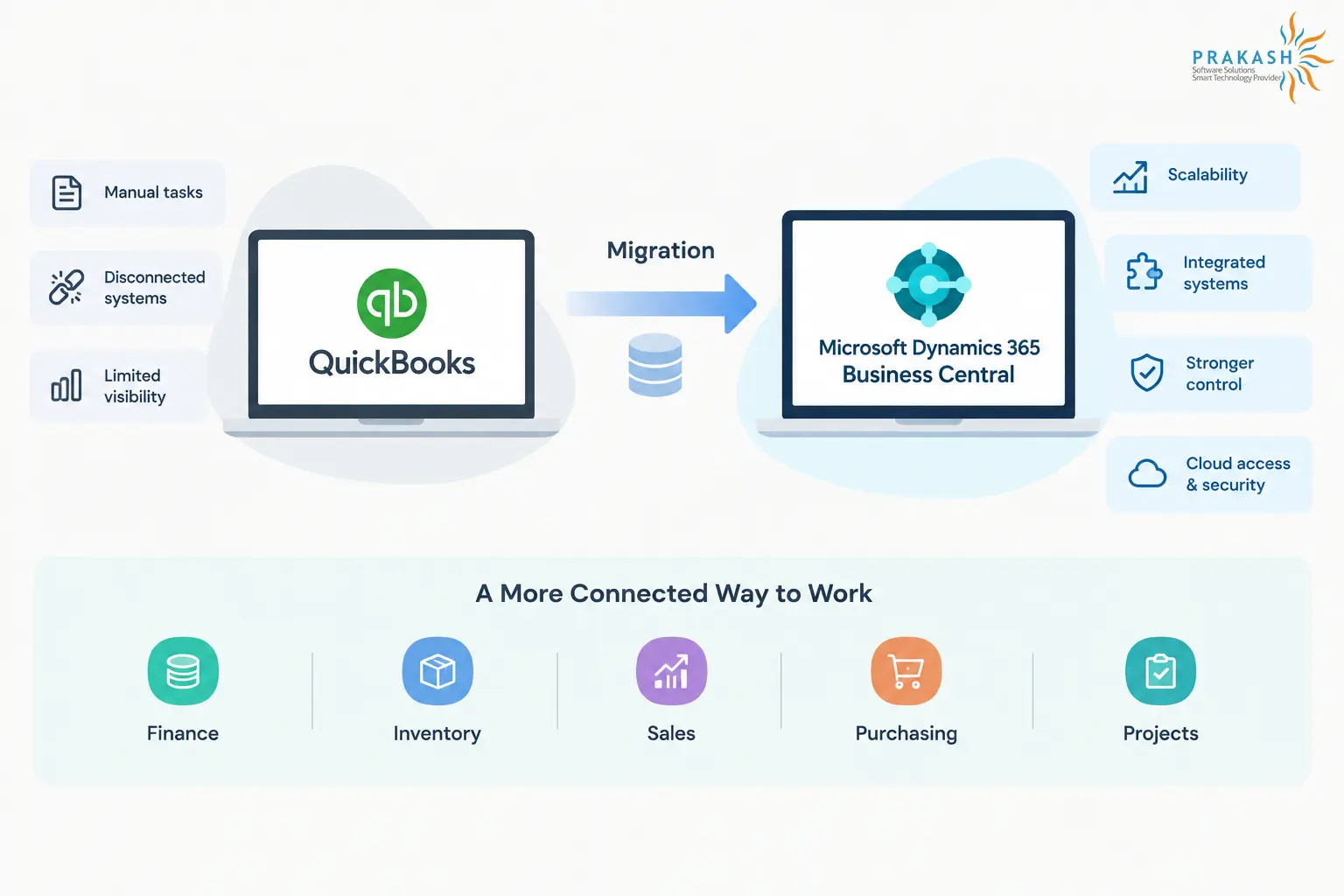
When different parts of the business work from the same information, it becomes much easier to see what needs attention and act on it. Microsoft Dynamics 365 Business Central unifies core business processes on one platform, connecting key areas of focus such as finance, inventory, purchasing, sales, warehousing, and production.
This gives teams a clearer picture of what is happening across the business. For instance, sales teams should be able to check inventory before confirming an order, or purchasing teams should be able to make crucial decisions based on current stock levels and estimated demand. Instead of switching between systems or waiting for information to be updated, teams can work from a more consistent view of the business.
For budding food and beverage businesses, that connected approach can make daily operations easier to manage while giving leaders the visibility they need to make faster, more informed decisions.

The Capabilities Behind Better Food & Beverage Operations
With the right tools in place, food and beverage businesses can bring more control to the processes that keep their operations moving. Business Central offers capabilities that help teams manage everything, be it inventory, purchasing, sales, and finances, all while working from connected information.
Keep Inventory Moving Without Losing Control
Managing inventory effectively becomes quite a challenge when products have limited shelf lives and demand can change rapidly. Business Central provides real-time visibility into stock levels, helping teams keep track of what is available, where it is stored, and what requires replenishing.
Lot tracking, expiry dates, and FIFO picking can also help reduce waste, improve traceability, and keep products moving efficiently.
Plan Purchasing Around Demand
Buying too much often leads to unnecessary waste, while buying too little results in stockouts and rushed orders. Business Central helps teams use inventory levels, sales patterns, and demand forecasts to make more informed purchasing decisions. This makes it easier to maintain the right stock levels while keeping purchasing aligned with customer demand.
Stay on Top of Production
For businesses involved in manufacturing, keeping production aligned with demand is essential. Business Central helps teams plan production, manage materials, and keep track of production orders in one place. With better visibility into what is available and what is needed, businesses can plan more effectively and avoid unnecessary production delays.
Track Products From Batch to Sale
Traceability is a core part of food and beverage operations. Business Central supports lot and batch tracking, giving businesses a clearer record of where products have come from and where they have gone. This can make it easier to respond to quality concerns, manage recalls, and maintain the information necessary for regulatory and customer requirements.
Bring Sales, Orders, and Warehousing Together
When sales and warehouse teams work with the same information, fulfilling orders becomes much easier. With the help of Business Central, teams can check product availability, manage fulfillment, and keep customers informed. This ultimately reduces the need for teams to rely on separate records or repeatedly check information across different systems.
Get a Clearer View of Costs and Margins
Keeping an eye on profitability is just as important as keeping products moving. Business Central brings financial data together with day-to-day operations, helping businesses see their costs and margins across products, customers, and regions. This gives decision-makers a clearer idea of what’s working well and where costs may need a closer look.
From Better Control to Sustainable Growth
As a food and beverage business scales, the support systems based around it need to scale as well. Business Central provides businesses with a foundation that can support changing needs without actually needing them to overhaul everything at once. Teams can begin with the areas they need most and add more capabilities as the business expands.
Its cloud-based setup also makes it efficient for teams to access the information they require from anywhere in the world on any device. With connections to tools like Microsoft Power BI, Power Automate, and Power Apps, businesses can easily extend their capabilities as new needs emerge.
More importantly, having connected information across the business makes it easier to make decisions with higher confidence. Whether it is adding new products, expanding into new locations, or managing large order volumes, businesses have better visibility into their operations and can scale without losing sight of what actually matters.
Choosing the ideal platform is only one part of building a more connected business. How it is implemented and aligned with your existing processes matters just as much. Prakash Software Solutions Pvt. Ltd. helps businesses put Microsoft Dynamics 365 Business Central into practice with services tailored to their operational needs.
From implementation and configuration to migration, integrations, and ongoing support, our experts help organizations bring Business Central into their existing operations smoothly. We focus on creating a setup that fits how your business works today while giving it the flexibility to support future growth.
Conclusion
In the food and beverage industry, growth often makes day-to-day operations more complex. More ingredients, supplies, products, suppliers, orders, production schedules, and customer demands all need to stay aligned, while factors such as shelf life, batch traceability, and changing demand leave little to no room for error.
Managing these moving parts via disconnected systems makes it difficult to control costs, reduce waste, and respond quickly when priorities change.
Microsoft Dynamics 365 Business Central brings these areas together, giving food and beverage businesses a connected view of the processes that keep their operations running.
This allows teams to work with the information they need without constantly moving between separate systems for tasks such as monitoring inventory, planning purchases, managing production, or fulfilling orders.
As businesses continue to grow, this connected approach helps to create a meaningful difference. More visibility helps teams to discover potential issues in the early stages, make more informed decisions, and keep operations aligned with evolving customer demands.
Alongside, businesses can add capabilities as their requirements change instead of needing to replace their systems every time they reach a new stage of growth.
In the end, sustainable growth isn’t just about selling more. It’s about having the processes, visibility, and control to handle that growth efficiently.
With Business Central supporting both the operational and financial side of the business, food and beverage companies can build a stronger base for growth and scalability. Whether they’re adding new products, entering a new market, or serving a new audience, they can scale with higher confidence and control.
Looking to Simplify Your Operations?
See how Business Central helps you manage your growing food and beverage business.
Frequently Asked Questions (FAQs)
Business Central connects areas like inventory, purchasing, production, sales, warehousing, and finance. This unlocks better visibility and easier routine operations management from one place for all teams.
Yes. Microsoft Dynamics 365 Business Central helps businesses keep track of stock levels, batches, lots, expiry dates, and inventory movement. This can help reduce waste, avoid stock shortages, and maintain better control over inventory.
Yes. Better inventory visibility, expiry tracking, FIFO picking, and demand planning help businesses avoid overstocking and manage products and inventory more efficiently, thereby reducing unnecessary wastage.
Of course. It can support them as their workflows and operations become more complex. Companies can add capabilities as their needs change without having to replace their entire system.
Yes. Business Central connects efficiently with MS tools, namely Power BI, Power Automate, and Power Apps, as well as other business apps. These integrations help businesses connect more processes and extend their capabilities.
I have managed SEO and digital campaigns in several industries, but the industries that have really benefited have one thing in common; the traffic we are driving is the right traffic, and each rupee spent relates to an actual business goal. It is easy to rank for a keyword and get clicks, but the challenge comes in when we need to ensure that these visits convert, and the team knows from which medium the visit came. It is here where most "set and forget" campaigns fail, and it is here where we concentrate most of our efforts.