
Machine Learning in Healthcare: How ML Is Transforming Diagnosis, Care Delivery, and Medical Research
Summarize and save time
Enormous volumes of data are generated by healthcare industries on a daily basis, from electronic health records to medical images, lab results, clinical notes, and wearable devices. Yet, the use of traditional methods makes it difficult to analyze all this information, which is why machine learning in healthcare has a great degree of opportunity.
Machine learning technology streamlines and improves data analysis by identifying patterns in complex medical data, providing early diagnosis, offering personalized treatments, predicting patient risks, automating routine administrative tasks, and accelerating medical research. This level of responsible diagnosis is not meant to eliminate or replace clinicians; instead, it equips healthcare professionals with better insights and more time to focus on patient care.
Several reputed AI app development companies, such as Prakash Software Solutions Pvt. Ltd. (PSSPL), assist startups and enterprises with advanced AI/ML solutions. They are known for using cutting-edge AI technologies to deliver production-ready solutions that are scalable, reliable, and completely customized. From strategizing to transforming your concept into a real-life product and ongoing monitoring, PSSPL experts offer end-to-end development assistance. We have a team of 250+ AI and data engineers with experience implementing state-of-the-art AI and ML solutions across diverse industries for 500+ global clients in 40+ countries.
In this blog, we will take a detailed look at how machine learning works in the healthcare industry, where this technology creates the highest value, the role of deep learning, challenges and ways to address them when implementing ML, and how to build measurable, safe, and scalable ML solutions with companies like PSSPL.
Recent Statistics: Machine Learning in Healthcare
The adoption of machine learning in healthcare is rapidly expanding, but organizations still lack the strong data foundation, governance, and clinical validation that is needed to move from pilot to production stage. This is why the demand for companies like PSSPL is accelerating to get end-to-end machine learning development services.
- AI is being broadly adopted across the health care ecosystem, with the U.S. FDA authorizing more than 1600 AI-enabled medical devices as of September 2026.
- According to the American Medical Association, 81% of physicians reported using AI in their professional work in 2026, up from 38% in 2023.
- The global machine learning market is projected to grow from USD 135.8 billion in 2026 to USD 684.4 billion by 2033, according to Grand View Research reports.
- The World Health Organization has projected a global shortfall of 10 million health workers by 2030, which will increase the demand for technologies improving the productivity of the healthcare team with extended access.
- There is expected to be a growing investment in high-quality healthcare data with a CAGR of 12.9%. This is following a projected growth from USD 645.4 million in 2026 to USD 1.51 billion in 2033 in the global market for AI training datasets in healthcare.
Machine learning has made its way from research labs to clinical decision-making, with the rising prominence of machine learning in the healthcare industry.
What is Machine Learning in Healthcare?
The use of machine learning in healthcare refers to the implementation of algorithms for extracting patterns from medical data. These insights help make predictions, classify information, detect anomalies, and support informed decision-making. Unlike fixed rule-based traditional software, the AI/ML assisted healthcare models are advanced with exposure to high-quality, relevant, and up-to-date data.
Machine learning models facilitate detailed data analysis to identify valuable data patterns but still involve human review to a certain extent. For instance, an ML model that scans chest X-rays can help a radiologist identify abnormalities in the new scan, but the final diagnosis and treatment are finalized by the clinician.
Therefore, technological advancement helps in prioritizing urgent use cases and ensuring that vital patient details and health findings are not overlooked. Medical judgment can’t be automated, but clinicians can get timely support with relevant and evidence-backed insights.
Several types of healthcare data that a machine learning model can analyze include:
- Clinical notes
- Physical documentation
- Electronic health records (EHRs)
- Lab results
- Wearable-device and remote-monitoring data
- Insurance claims, bills, and operational data
Machine Learning vs. AI vs. Deep Learning
Terms like machine learning, artificial intelligence, and deep learning are often used interchangeably. But that doesn't mean they have the same meaning, purpose, and use. Here's how these technologies differ:
| Technology | Meaning | How It's Implemented in Healthcare |
|---|---|---|
| Artificial Intelligence (AI) | A broad field with focus areas on systems that can perform tasks resembling human-like intelligence. | Virtual health assistants that you see on the websites of healthcare businesses provide automated responses to patient inquiries. |
| Machine Learning (ML) | A subset of artificial intelligence that interprets patterns from data insights. | An automated model predicting the risk of hospital readmission. |
| Deep Learning | A subset of machine learning using multi-layer neural networks. | An ML-powered model detecting tumors in medical images. |
| Natural Language Processing (NLP) | AI capability that can comprehend human language. | An AI-powered medical system that extracts information from clinical notes on its own. |
The use of deep learning is extensive in the healthcare industry because it can seamlessly process unstructured and complex medical data, including images, audio, and clinical notes. Deep learning and machine learning development services work best when they are connected to reliable clinical workflows.
How does Machine Learning Operate in the Healthcare Industry?
Machine learning solutions in the healthcare industry typically follow a set of steps as part of a structured approach. This helps ensure seamless integration of the ML solutions without disrupting your business operations and continuity.
(1) Define the Clinical Problem
Begin with a specific and measurable clinical problem, such as predicting the risk of readmissions, reducing the chances of no-shows, automating medical coding, and so on. This should be the ideal way to start, because starting with technology can be a reverse approach. If you want the ML model to solve a real-time clinical problem, you must identify the challenge in the picture.
(2) Data Preparation
Machine learning models require updated, high-quality, and relevant data. This can include recent lab results, EHR data, clinical notes, claims data, device data, medical images, etc.
Data preparation is therefore a crucial stage when considering the development and implementation of machine learning solutions in the healthcare industry. This step can include:
- Cleaning up inconsistent data records
- Standardizing the medical terminologies
- Structuring unstructured clinical notes
- Eliminating duplicated or incomplete medical records
- Data labeling for supervised learning
(3) Model Training and Validation
Model training involves analyzing, learning, and adopting patterns from historical data. The learned patterns are then tested on separate data to evaluate its accuracy, relevance, sensitivity, and alignment with the performance metrics.
Bonus Tip:
Train the model on diverse clinical settings and population dynamics, because a model that is trained and validated for a specific demographic group or hospital might not give reliable results in other scenarios.
(4) Integration with Clinical Workflows
You must design a machine learning model that seamlessly fits into the systems that clinicians already use. Without adding extra complexities or alerts, the model should provide clear outputs, explainable insights, and relevant alerts. This can include EHR integration, patient portals, billing and claims processing systems, communication systems, and so on.
(5) Monitoring and Support
Healthcare data keeps evolving, clinical practices change, and new treatments emerge every once in a while. As a result, model performance also varies substantially based on these changing dynamics. It’s important to monitor performance, introduce model upgrades and refinements as needed, and improve the model based on user feedback and market data insights.
Key Use Cases: Machine Learning in Healthcare
Machine learning development services have a broad application in the healthcare industry. It can improve clinical care as well as healthcare operations if planned and implemented strategically.
Below mentioned are the most practical and high-impact use cases of machine learning in healthcare:
Medical Imaging and Diagnostics
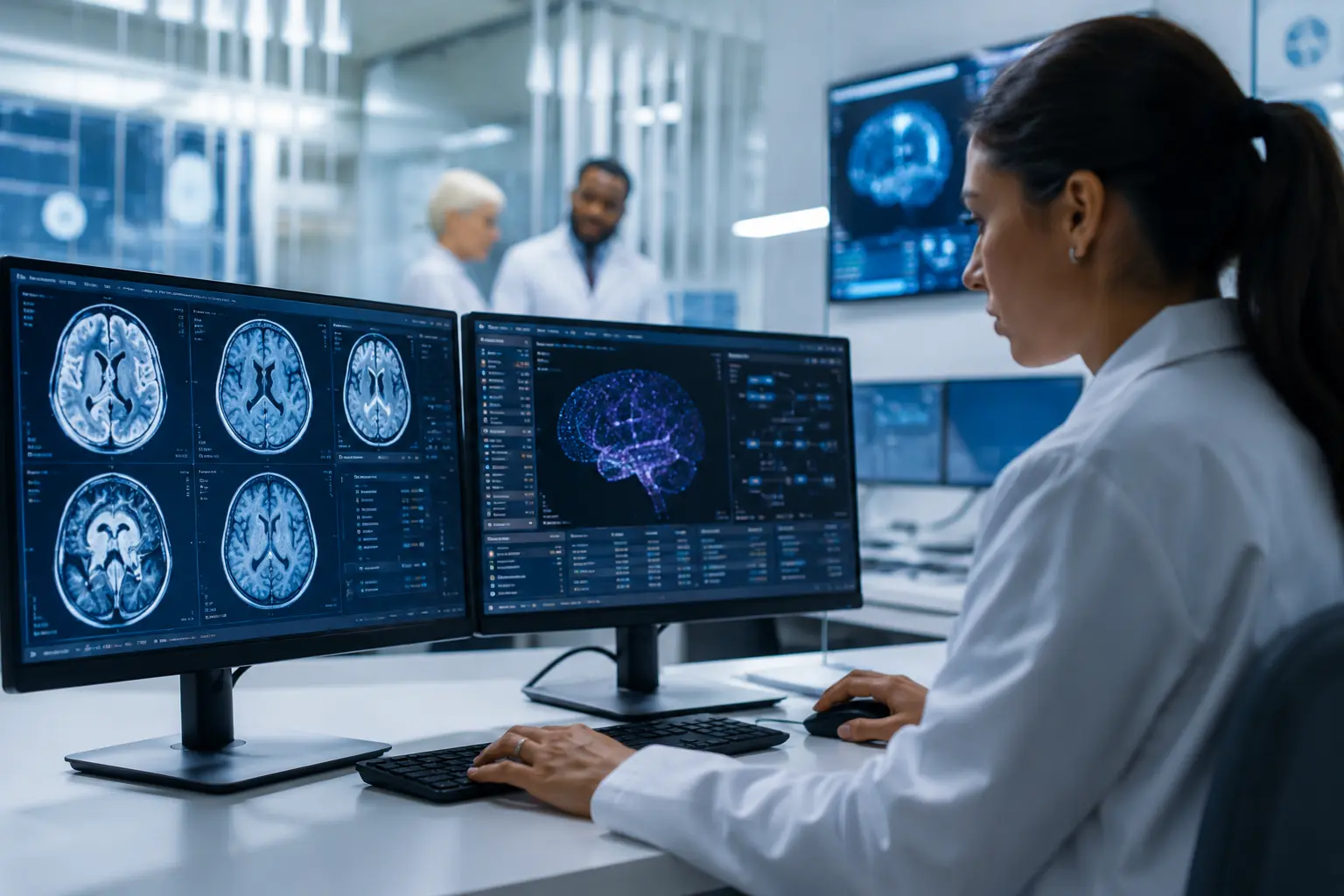
One of the most mature, highly regarded, and common applications of machine learning in healthcare is medical imaging. Deep learning models scan X-rays, CT scans, ultrasounds, MRIs, and identify potential abnormalities in the patient based on this analysis.
Common applications of these tools that support clinical expertise include:
- Detecting tumours or lung blockages
- Identifying fractures
- Analyzing mammograms for breast cancer symptoms
- Identifying dermatological conditions
- Supporting pathology analysis
Personalized Medicine and Treatment Optimization
Machine learning models provide the option to tailor the treatment to an individual patient’s requirements. At PSSPL, we provide custom ML solutions for healthcare industries by analyzing clinical records, lab results, lifestyle factors, and response to the treatments given. This is especially valuable in oncology, where the treatment responses vary from patient to patient.
Predictive Analytics
Before the symptoms become severe and deteriorate the patient’s health, machine learning predicts and helps prevent it. In hospitals, predictive models are used for detecting risks, like cardiac arrest, readmission, etc.
Predictive analytics provides support in:
- Preventing hospital readmission
- Managing chronic diseases
- Predicting chances of no-show patients
Clinical Documentation and NLP
Substantial time is spent by clinicians on accounting and documenting patient encounters. Natural Language Processing and generative AI help to overcome or reduce this challenge by converting speech into summarized reports, clinical drafts, key information sources, or supporting medical coding documents.
This reduces the administrative workload by giving clinicians more time to focus on patient care. Make sure that these sensitive documentations are reviewed by clinicians before they become a part of the medical records.
Support in Clinical Decision Making
Clinical decision support systems (CDSS) utilize machine learning to provide evidence-based recommendations, flag potential risks, and provide relevant information at the time of patient care.
Remote Patient Monitoring
Remote monitoring tools and wearable devices generate continuous streams of patient data. Machine learning analyzes this data to detect changes in the health status and send alerts to the healthcare teams when escalation or intervention is necessary.
Some examples of patient monitoring include:
- Monitor heart rate and rhythm
- Detect high blood glucose levels in elderly patients
- Support chronic-disease management
- Identify early signs of health deterioration
Claims Processing and Fraud Detection
Machine learning in healthcare also automates claims processing, detection of fraudulent claims, and identification of billing errors to improve the overall revenue-cycle performance. With analysis of claims data, historical data patterns, and code diagnosis, ML models help reduce the chances of false positives and improve the accuracy of predictive analytics.
Benefits of Machine Learning Development Services in Healthcare
Machine learning development services in healthcare deliver optimal value by improving clinical outcomes, operational efficiency, and patient experience. Here are a few top-rated benefits of machine learning development services in the healthcare industry:
Early Detection and Intervention
In contrast to traditional methods, ML assists in earlier risk and pattern identification. This provides timely intervention, which improves the overall outcomes and reduces the cost of patient care.
Personalized Care
Machine learning in healthcare can personalize treatment according to specific patient diagnoses and treatment. The treatment is aligned with the patient’s characteristics and the identification of potential risks.
Improved Diagnostic Support
Machine learning assists clinicians in identifying patterns in complex data that might be difficult to detect manually. This reduces the chances of missing key findings and improves diagnostic consistency.
Better Operational Efficiency
Machine learning not only improves patient care but also helps to optimize staffing, scheduling, inventory management, and resource allocation. As a result, healthcare organizations can serve more patients with uncompromised care quality.
Fast Medical Research
Machine learning models in healthcare help to accelerate medical research, drug discovery, fraud detection, and clinical trial testing. They automate the analysis of large datasets and identify patterns that would be time-consuming for clinicians to find.
Challenges and Risks of Machine Learning in Healthcare
For measurable results, it’s important that machine learning is implemented strategically in healthcare. Healthcare organizations deal with an enormous volume of sensitive patient details, which is why ensuring privacy and clinical trust are non-negotiable.
Some common challenges and risks of machine learning in healthcare include:
Data Quality and Fragmentation
Healthcare data is often spread across multiple systems, inconsistent, and incomplete. As a result, before using this data further, organizations have to spend considerable time and effort cleaning, structuring, and standardizing the data to be used by the machine learning models.
Algorithmic Bias
If ML models are not trained on diverse datasets, the results can be worse for certain groups. This can widen the healthcare disparities instead of reducing them.
Privacy and Security
Healthcare organizations deal with highly sensitive patient data, which is why their confidentiality is essential. Machine learning systems therefore need to comply with strict privacy regulations, which can include:
- Data encryption
- Role-based access controls
- Auditing and secure data storage
- Regular security assessments
Integration
If an ML model doesn’t fit well into the existing clinical workflows, it can fail in production even if it has passed the testing stages. Poor integration can reduce adoption and disrupt the care teams.
Regulatory Concerns
Machine learning in healthcare also needs regulatory oversight, which is why organizations need to identify model errors, monitor responsibilities from time to time, and escalate procedures to clinicians in high-impact use cases.
How PSSPL Helps Build Machine Learning Solutions?
Prakash Software Solutions Pvt. Ltd. (PSSPL) facilitates startups, SMBs, and enterprises to move beyond AI experimentation. We combine software engineering excellence, AI competence, and advanced AI/ML technologies to design hands-on machine learning solutions. Our end-to-end development approach starts with an understanding of your needs and long-term goals, and we then customize solutions tailored to your specifications.
Our goal is to deliver practical, secure, scalable, and reliable ML solutions that can deliver real-time value in patient care and clinical needs.
Our range of machine learning development services in healthcare includes:
- Use case discovery and feasibility assessment
- Natural language processing for clinical notes and documents
- Medical imaging and diagnostics using deep learning
- Evaluating healthcare data and system readiness
- Predictive analytics
- Model monitoring, governance, and post-launch support
- Security and compliance assurance
Frequently Asked Questions (FAQs)
Artificial intelligence is a broad field that includes several subsets and systems capable of performing tasks that demand human-like intelligence.
Machine learning in healthcare, on the other hand, is a subset of AI that learns patterns from historical data.
Deep learning is a subset of ML that utilizes multi-layer neural networks. It's especially useful in cases of complex data, such as medical imaging, audio, clinical text, etc.
Yes, machine learning can help improve patient care by supporting earlier detection, ensuring better risk management, offering personalized treatment, and ensuring efficient care coordination.
No, machine learning is designed to support clinical expertise, not to replace them. It can help in automating repetitive tasks and providing decision support, but the final responsibility for diagnosis and treatment is decided by the clinicians.
The biggest challenges in implementing machine learning in healthcare are related to:
- Data quality
- Bias
- Integration
- Privacy and security
- Model monitoring and support
The Future of ML in Healthcare
Machine learning has introduced a transformative shift in the healthcare industry by assisting organizations in turning complex data into actionable insights and valuable data patterns. ML models assist in proactive, efficient, and personalized patient care by building a strong data foundation, testing and validating models, and maintaining human oversight.
If you are looking to partner with organizations that offer a combination of machine learning expertise with healthcare software engineering excellence, Prakash Software Solutions Pvt. Ltd. is the right long-term partner. At PSSPL, we offer end-to-end development with our integrated approach across discovery, design, development, integration, deployment, and ongoing support. Add machine learning in healthcare with customized solutions that build a resilient healthcare system for improved patient care.
Being involved in building a significant amount of generative AI applications I can say that the success of these apps lies in one thing — their model is integrated into a user’s workflow and people trust their results. Building some LangChain agents or ML models in a notebook? Piece of cake. The real deal is to build something useful in production, to ground it so that it won't start hallucinating and doing stuff for no reason. This is where most demonstrations fail silently, and this is what we concentrate on the most.