
How AI is Transforming the Logistics Industry: Use Cases, Cost, and Implementation Process in 2026
Summarize and save time
The future of logistics is driven by modern technologies like AI, transforming the supply chain with automation, speed, and customisation. Business leaders in the logistics industry are looking ahead and analyzing the upcoming industry trends that are going to completely transform future operations.
Many are partnering with experienced AI consulting services in Australia. AI adoption in Australia’s logistics sector in 2026 is accelerating through the integration of emerging technologies. The conversations in this sector have shifted from experimental silos to architectural integration.
Logistics management revolves around the transportation, storage, and movement of products and raw materials. With the use of warehouse and transportation management software, they can streamline the process to an extent. With AI in logistics, more accurate ETA predictions can be generated.
Top 7 Key Applications of AI in Australian Logistics
One interesting fact about AI is that it should not be applied everywhere. In fact, one of the biggest mistakes many companies make is trying to integrate AI into every part of their business. Though AI is being adopted at a faster pace, hiring a trusted AI consulting service in Australia will help you figure out its use case for your business. The best use of AI in logistics is where decisions are frequent, deadlines are tight, and outcomes can be measured. Let’s have a look at the key applications of AI in Australian logistics.
1. Last-Mile Planning
As per the CapGemini Research Institute, the cost related to the final step from a warehouse to the doorstep of the customer has become expensive over time. Back in 2018, it accounted for 41% of total delivery costs, but by 2023 it had risen to 53%. The core reason behind this is that customers these days like to receive their orders on the same day or the next day; basically, they want super-fast delivery.
To fulfill their demand, companies have to spend more on extra trips, petrol, and labor wages. AI helps by acting like a smart GPS; it processes the addresses, traffic, truck sizes, and unexpected delays to plot the fastest routes. This reduces the wasted time, fuel, and money while speeding up the delivery process.
2. Demand Forecasting
Conventional demand forecasting relies on internal historical data. With the help of AI-powered demand forecasting tools, AI-powered tools can analyze external factors such as regional events, weather, and changing customer demand patterns, improving forecast accuracy by up to 30%, saving the inventory management team from overstocking and stock-outs.
3. Risk Detection and Security Enhancements
AI in logistics in Australia helps by protecting the transportation from various risks of fraud, theft, and cybersecurity threats. AI systems alert you instantly whenever they witness or identify any suspicious activity. Allowing you to respond quickly and protect your operations. They save you from costly disruptions by detecting various types of threats.
4. Warehouse Automation and Robotics
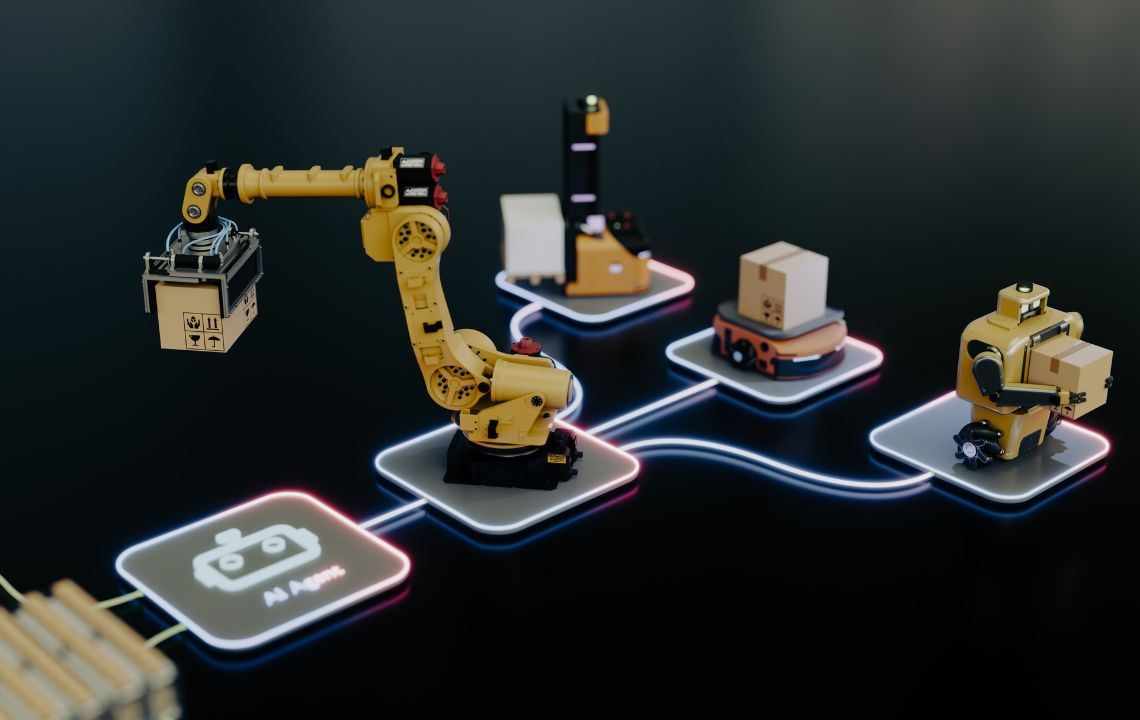
With AI in logistics, the days are not far away when robots will be seen operating the entire process, without human intervention. While the concept of robots has been introduced into warehouse management, it would be safe to say that it’s struggling. With Australia facing persistent labour shortages, human errors are leading to costly reversals. These reasons are enough to push businesses to invest in AI consulting services in Australia. They will help you build a modern warehouse integrated with AI-powered robots.
5. Enhancing Customer Service and Experience
When you hire AI consulting services in Australia, they help you build a GenAI-based chatbot. These chatbots solve easy to complex logistics queries for customers. Some of the most common queries they ask are,
- Can this product be delivered to my address?
- Can this carrier handle shipments across the country or multiple packages in Australia?
The traditional ways of finding answers to such questions were through digging into complex spreadsheets; now, AI chatbots make finding answers easy and hassle-free. Any new rule added gets updated automatically.
6. Route Optimization
With the help of AI models, organizations can analyze current routes and continuously optimize them. Businesses can reduce shipping costs and speed up the shipping process with route optimization. For example, an AI-powered traffic management platform can enhance efficiency, safety, and connectivity on the roads.
7. Cybersecurity and Compliance Pressure
In 2026, businesses are expected to face a spike in cyber crimes and unethical practices that they need to look out for. Under the SOCI Act, the logistics network is considered critical infrastructure, which means that any AI vulnerability can cause major harm and penalties. The solution to this issue is to train all models and store data within Australian borders, and comply with the Privacy Act.
What is the Cost of Implementing AI in Logistics?
The cost of implementing AI in logistics depends on the size of your company and the experience of the AI consulting services in Australia you choose to hire. Typically, the costs range from $10,000-$50,000. Here is a detailed breakdown of the key expenses:
| Initial Assessment | $10k- $75k |
| Data Infrastructure | $25K- $200K |
| Software/Licensing | $20k- $500k |
| Hardware | $0-300k |
| Annual Maintenance | $10k-$50k |
Transform Logistics with Cutting-edge Technology
At PSSPL, we build custom logistics software that helps enterprises to improve their supply chain operations, add real-time tracking, and boost overall efficiency.
AI in Logistics: A Step-By-Step Implementation Process
When you hire experienced AI consulting services in Australia, they help you to implement AI in logistics through a strategic and step-by-step process. This approach is tailored to the needs of your business.
Identify Your Business Objectives
There can be various aims for implementing AI in your logistics business, including reducing delivery costs, improving route efficiency, or enhancing customer experiences. A trustworthy AI consulting service in Australia would always begin by defining the goals and objectives, so that the solutions align with the overall business strategy.
Assess Current Infrastructure
To implement AI in logistics in Australia, it’s crucial to evaluate the existing logistics systems, data sources, and IT infrastructure. Implementing modern technologies can be possible only if the system is ready for integration. If it’s not capable of handling AI, then the necessary steps are taken by identifying gaps and necessary upgrades.
Choose the Right AI Use Case
To identify high-impact areas where AI will benefit the most is the job of AI consulting services in Australia. For example, AI can help in optimizing routes, automating warehouses, and forecasting. The more accurate the use case, the faster businesses can see the results.
Choose the Right Set of Technology and Tools
To integrate AI in logistics, it’s necessary to choose the right set of AI tools, platforms, frameworks, and technologies based on the needs of your enterprise. When you partner with the best AI development company, they make the right decisions for you.
Design and Develop AI Models
While many enterprises are moving at a faster pace to adopt AI in their day-to-day workflow, most of them fail badly in scaling the same. The major reason behind this is improper planning and not aligning it with your operating system. AI consulting services in Australia build AI algorithms that are tailored to the use case of your business, and train them using rich and prepared datasets. With continuous training and refinement, the accuracy and adaptation capabilities get better.
Testing and Deployment
As a part of AI consulting services in Australia, your AI solutions are integrated with existing ERP, CRM, and logistics management systems. A thorough review is done to identify any possible issues. Once the solution passes the testing phase, the risk is reduced, ensuring a smooth implementation.
What is the Future of AI in Logistics (Australia 2026 and Beyond)
- Autonomous vehicles and Drones for speeding up the deliveries.
- Digital twins for simulating logistics operations.
- Eco-friendly logistics through AI-focused strategies for lowering emissions.
- Using generative AI for the planning and optimization of logistics.
- Hyperautomation combining AI, RPA, and analytics.
- AI+IoT integration for tracking and monitoring in real-time
How is PSSPL Utilizing AI to Revolutionize Logistics in Australia?
PSSPL, one of the most trustworthy AI services in Australia, includes new AI capabilities that help businesses streamline logistics tasks, reduce inventory holding costs, and optimize carrier routes. They aim to help manufacturers lower costs, improve employee safety, and shorten delivery times.
With expertise in AI, machine learning, and automations, PSSPL is helping businesses transform their logistics operations completely. Their services also include AI-powered route optimization, predictive analytics, custom logistics software development, and warehouse automation.
By hiring PSSPL, businesses can witness 35% efficiency gains with 99.50% security compliance that ensures a safe and steady transition into modern technologies. As the Australian industry in logistics is evolving, it’s time for businesses to invest in a trustworthy AI-driven company that will help build future-ready supply chains.
Find Out the Real Cost of AI in Logistics for Your Custom Project With PSSPL
Share the Details, Objectives, and Goals of Your Project, and We Will Help You Estimate the Real Cost and the Factors Contributing to These Costs.
I've done quite a number of computer vision projects for retail companies, but there are some projects that really make an impact, and they all have one thing in common: the model integrates seamlessly with their current POS and inventory system, and the team has absolute confidence in what the model tells them. Installing the cameras and setting up the algorithms? It's the easy part. The hard part is making sure everything works together and the people are prepared to take action. This is where most out-of-the-box solutions fail, and this is where we focus most of our efforts.