


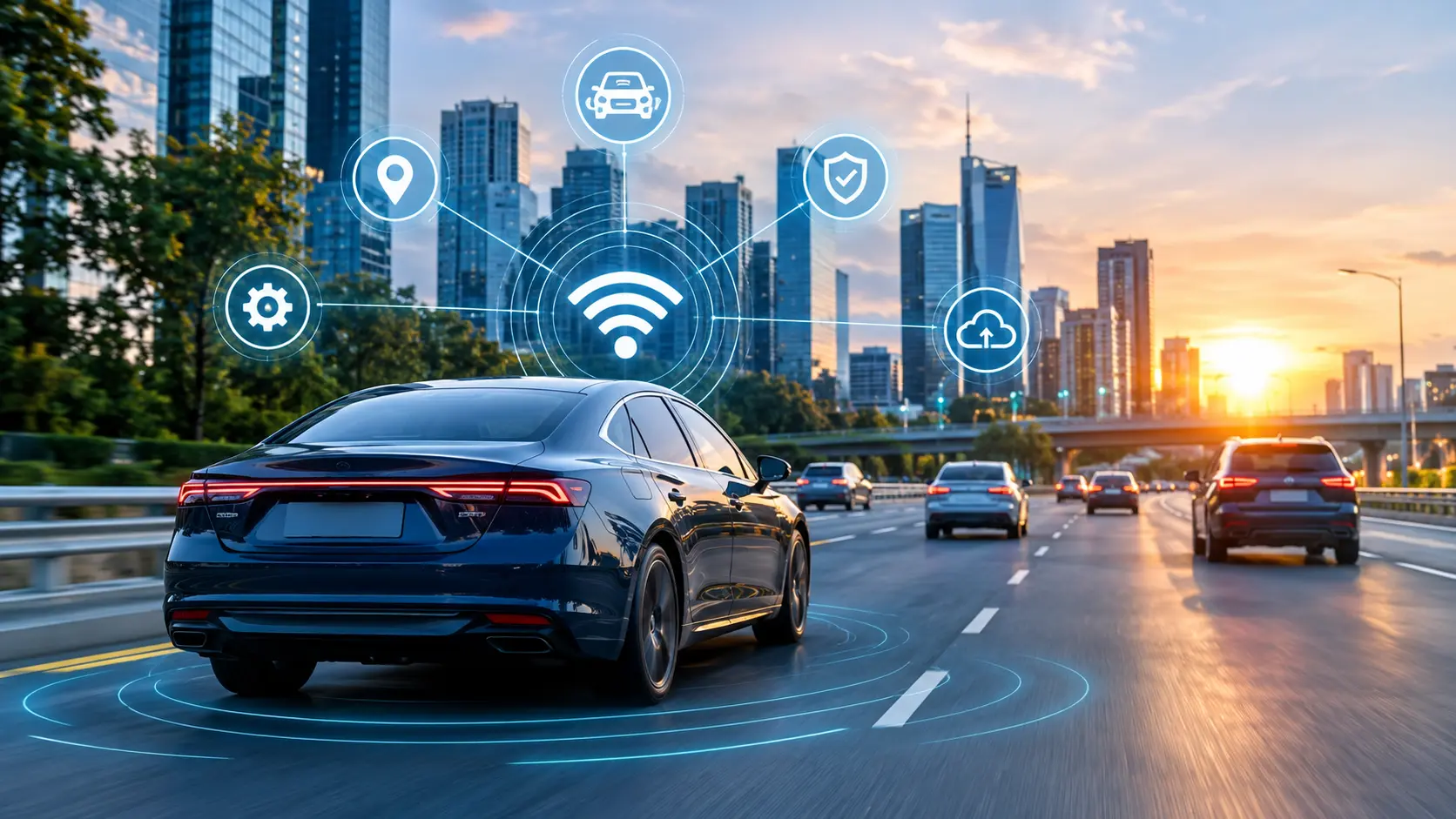
IoT in Automotive: How Connected Vehicles Are Transforming Mobility, Safety, and Fleet Operations
Summarize and save time
The automotive industry is no longer what it used to be; vehicles aren’t merely mechanical machines, but they act as connected digital platforms generating data, supporting driver assistance, communicating with cloud systems, and enabling advanced services. The automotive industry has undergone rapid digital transformation, and the driving factor behind this is the advancement of AI technologies.
This is mainly the result of the growing prominence of IoT in the automotive industry, which has resulted in smarter, efficient, and safer vehicles with the use of sensors, edge computing, cloud platforms, and real-time analytics. From connected cars to fleet management and EV charging, IoT development services have entered the automotive industry in full swing. It has changed the way suppliers, automakers, fleet operators, vehicle dealers, and mobility companies design, use, manufacture, sell, and service vehicles.
IoT doesn’t mean simply adding sensors; it’s about designing secure and scalable systems that turn vehicle data into measurable business value. Since this has become an enormously expanding and demanding market, reputed AI app development companies like Prakash Software Solutions Pvt. Ltd. (PSSPL) are offering top-rated IoT services as part of their comprehensive AI app development services.
Our team of AI developers and data engineers is proficient in advanced and cutting-edge technologies that empower startups and enterprises to experience enterprise-grade solutions and systems. In this blog, we will walk through the detailed use of IoT for the automotive industry, the key technologies involved, its practical use cases along with implementation challenges, and how you can partner with companies like PSSPL to build connected automotive solutions.
Automotive IoT Market Statistics
Modern vehicles are emerging as a connected ecosystem powered by the shift towards the Internet of Things. IoT connects physical objects to digital systems that assist in collecting and analyzing data from sensors, communicating with cloud platforms, receiving software updates, and interacting with drivers. The significance of IoT in automotive varies based on user dynamics.
In the consumer industry, IoT delivers a personalized and convenient driving experience where drivers are updated on the smallest details related to the vehicle, such as alerts for refueling, receiving navigation notifications, tracking vehicle location, receiving maintenance alerts, etc. For automakers, IoT is shifting the way vehicles share information by utilizing connected sensors and analytics platforms for ensuring faster, reliable, and cost-effective manufacturing. These sensors assist manufacturers to monitor production lines, track inventory stock, detect defects, and improve quality control.
Automotive IoT is expanding rapidly and moving to a future where vehicles are not just connected but also intelligent enough to promote electric mobility and data-driven services. Let’s look at the market statistics that indicate the growing scale of this opportunity:
- According to reports from Grand View Research, the global market for IoT in automotive is projected to grow from $229.8 billion in 2026 to $554.3 billion by 2033.
- As per Quectel reports, the connected car solutions market is forecast to experience triple growth from $54.4 billion in 2024 to $148.6 billion by 2030.
- Connectivity has crossed into the mainstream, with 54% of drivers already using at least one manufacturer-provided connected service.
- According to a 2026 Deloitte Global Automotive Consumer Study, 95% of customers are willing to pay for software-defined vehicles, with safety, security, and continuous vehicle-health reporting among the top-rated features that they value.
What is IoT in Automotive and How it Works?
IoT in automotive refers to the use of sensors, connected devices, software, and communication networks that facilitate collection, transmission, and analysis of vehicle-related data. IoT builds a network of connected vehicles by connecting them with cloud platforms, mobile applications, manufacturing systems, dealerships, and service networks.
IoT-connected vehicles use sensors and systems that help monitor the following specifics:
- Engine performance
- Fuel consumption
- Battery health and charging status
- Location, speed, and route history
- Vehicle diagnostics
- Tire pressure and brake condition
- Connectivity status
The use of IoT development services fosters secure data movement between the vehicle, cloud, and business applications. Automakers and fleet operators can monitor the vehicle’s functionality, optimize routes, and deliver personalized driver services by extracting value from the real-time vehicle data gathered using IoT.
The functioning of a typical automotive IoT solution relies on 4 layers:
(1) Vehicle Edge Layer
The vehicle edge layer includes components like cameras, sensors, telematics units, and electronic control units (ECUs). These devices are used for gathering data from the vehicle and its surrounding environment. Examples of this layer in IoT include:
- GPS modules
- Cameras and radar systems
- Tire-pressure sensors
- Engine and battery sensors
(2) Connectivity Layer
The connectivity layer is used for transmitting data between the vehicle and external systems. This is facilitated by using Wi-Fi, Bluetooth, cellular networks, and vehicle-to-vehicle communication. The connectivity layer supports functions like:
- Remote diagnostics
- Real-time vehicle tracking
- EV charging management
- Navigation and fleet communication
- Traffic updates
(3) Cloud Platform Layer
The cloud platform is used for storing, processing, and analyzing vehicle data gathered using IoT in automotive. This layer can identify patterns across millions of vehicles, serving its usefulness for large-scale analytics, predictive maintenance, and AI-based insights. It can include:
- Analytics engines
- Time-series databases
- Machine learning models
- Device management systems
(4) Application Layer
The application layer is used for conveying valuable and real-time insights to the users. This can include fleet dashboards, driver mobile apps, dealer service portals, and EV-charging applications.
By providing real-time vehicle data, diagnosis and analysis become easier. For instance, a fleet manager receives an alert when there are signs of engine trouble in the vehicle.
Key Technologies Used in IoT for Automotive
IoT for automotive utilizes several technologies that work collaboratively to deliver real-time vehicle data. Some of the key technologies used include:
Edge Computing
In edge computing, data is often processed closer to the source, mainly inside the vehicle or at a roadside unit. This promotes safety-critical applications and reduces latency, which doesn’t rely on cloud connectivity.
For instance, a vehicle can detect an obstacle by processing camera and radar data locally.
Sensors and Telematics
Sensors are used for collecting data from vehicles, and telematics devices transmit that data between cloud platforms and business systems. Collectively, this offers real-time visibility into vehicle health, location, usage, and performance.
Cloud Computing
Cloud platforms offer processing, scalable storage, analytics, and application hosting. This helps automotive companies to analyze vehicle data in real time, manage large fleets, and deliver software updates.
Digital Twins
A digital twin refers to the visual representation of a vehicle, production line, and fleet. The purpose is to simulate performance, test scenarios, and promote predictive maintenance.
Artificial Intelligence and Machine Learning
AI and machine learning analyze vehicle data to help in identifying patterns, predicting failures, detecting defects, and supporting informed decision-making. For instance, ML can be used to predict a likely component failure based on historical sensor trends.
5G Connectivity
5G offers agile speed, lower latency, and increased capacity compared to earlier mobile networks. This promotes real-time vehicle communication, high-volume data transfer, and advanced driver-assisted systems.
Major Real-World Applications of IoT in Automotive
From manufacturing to vehicle operations and maintenance, IoT is utilized across the entire automotive chain. High-value use cases of IoT in the automotive industry include:
Predictive Maintenance
One of the most valuable use cases of IoT in automotive is predictive maintenance. Instead of waiting for a component failure at a later stage, IoT sensors help monitor the vehicle’s health to identify potential warning signs beforehand. This reduces the risk of unplanned downtime, keeps maintenance costs in control, and improves safety.
It’s possible to predict when vehicle maintenance will be needed by using machine learning models for data analysis. For instance, IoT sensors can help track the engine temperature, brake wear and tear, oil condition, and tyre pressure.
Connected Vehicles
IoT connectivity is used by connected vehicles to provide navigation, diagnostics, safety alerts, and software updates. It’s easier for drivers to lock or unlock the vehicle remotely, verify the fuel and battery status, identify the car’s location, and receive reminders for maintenance. For automakers, connected vehicles using IoT sensors help in improving product design, early identification of defects, and offering new digital services.
Fleet Management
Another top-rated application of IoT for automotive is fleet management. IoT data is used by fleet operators for vehicle tracking, monitoring driver behavior, helping with route optimization, managing fuel consumption, and improving compliance.
A fleet dashboard provides the following data to fleet operators that helps reduce costs, improve utilization, and deliver better customer service:
- Efficiency of route
- Delivery performance
- Vehicle location
- Fuel and energy consumption
- Driver behavior
- Maintenance requirements
Driver Safety and Monitoring
IoT promotes driver safety by monitoring their driving behavior for acceleration, braking patterns, speeding, use of seatbelts, and any possible on-road distractions. This data, when used by fleet operators, can help them train drivers, foster safety, and reduce the risks of accidents.
Remote Diagnostics
Without the need for the vehicle to arrive at a service center, IoT promotes remote diagnostics that facilitate early identification of issues. It also provides software updates that help improve the vehicle’s features, fix issues early on, and introduce new capabilities.
Vehicle Tracking
GPS-based IoT systems assist owners and fleet operators in tracking the vehicle’s location, detecting unauthorized movements, and supporting recovery in case of theft.
Smart Parking
IoT can help with smart parking by showing the available parking spots, providing automatic payment options, and reducing the possibility of traffic congestion. IoT has therefore replaced the need for physical staff with automated toll collection and roadside assistance.
Other high-impact use cases of IoT in automotive include:
| Automotive Manufacturing | Fleet Management and Logistics | Electric Vehicles and Charging |
|---|---|---|
|
How IoT is Applied IoT sensors are used by automotive manufacturers in the form of industrial cameras, robotics, and analytics platforms. This helps in smart manufacturing by identifying defects, improving quality, monitoring production lines, reducing costs, and fostering production efficiency. |
How IoT is Applied Another practical and value-adding application of automotive IoT is fleet management. It assists businesses to manage vehicles, routes, drivers, fuel consumption, and compliance all from a single platform. In the logistics industry, IoT helps to improve the visibility of delivery status, improve customer service, and optimize the service routes. |
How IoT is Applied Electric vehicles have a growing demand in the automotive market, with a heavy reliance on IoT for data insights on battery health, energy consumption, charging status, and so on. This type of data helps improve performance, safety, and user experience. |
|
Examples
|
Examples
|
Examples
|
Benefits of IoT Development Services
IoT development services in automotive deliver several benefits along with safety, customer experience, efficiency, and improved business outcomes. Some of the top-rated benefits of IoT in automotive include:
Improved Vehicle Safety
IoT provides support for emergency assistance, predictive maintenance, and driver monitoring, all of which help reduce the chances of accidents and promote road safety.
Reduced Maintenance Costs
Before issues escalate into expensive maintenance failures, IoT helps identify them through predictive maintenance. This helps to reduce unplanned downtime and extend vehicle life.
Enhanced Customer Experience
Connected vehicles are known for offering personalized services, real-time traffic updates, and proactive maintenance alerts.
Agile Product Improvement
By utilizing real-world vehicle data, automakers can identify issues, introduce design improvements, and develop better products.
Better Fleet Efficiency
IoT sensors assist fleet operators in optimizing routes, reducing fuel consumption, increasing vehicle utilization, and improving driver behavior.
Better Revenue Opportunities
IoT opens the scope for new revenue opportunities for businesses with advanced services like predictive maintenance subscriptions, EV-charging services, usage-based insurance, and so on.
Challenges and Risks of Implementing IoT in Automotive
Despite the top-rated benefits of IoT development services, there are several limitations that need to be considered when implementing IoT in the automotive industry. The most common implementation challenges include:
Cybersecurity Risks
Connected vehicles are easy and potential targets for cyberattacks. Even the smallest security breach can have a collective impact on the entire vehicle system, customer data, and fleet operations.
Data Privacy and Security Concerns
IoT in automotive gathers sensitive vehicle information, including but not limited to location, driver behavior, and in-cabin activity. It’s essential for automakers to abide by privacy regulations and safeguard this data with better and clearer recommendations.
Data Volume and Cost
Large data volume is generated by modern-day vehicles. Transmission, storage, and analysis of all of it can be super expensive and time-consuming. This is why organizations must have a defined strategy for data filtering, edge processing, and storage optimization.
Reliability and Connectivity
It’s important to ensure the reliable functioning of IoT services in all business environments, including remote areas, tunnels, and areas with poor connectivity.
Legacy System Integration
Legacy systems are often used by automotive companies for dealer management, service and maintenance, fleet operations, and manufacturing. Integration of IoT data with these types of multiple systems can be highly complex.
Compliance and Security
IoT for automotive must comply with the safety, privacy, and cybersecurity regulations to ensure the efficiency of connected vehicles and autonomous driving features.
How to Build Automotive IoT Solutions with PSSPL?
If you are considering building and implementing IoT in automotive, it’s not merely about designing and adding sensors. It needs to have a structured process where the objective is clearly defined, the process is laid out with a secure architecture, and a phased implementation approach is outlined.
This is possible when you partner with AI app development companies like Prakash Software Solutions Pvt. Ltd. (PSSPL). Our AI experts assist automotive companies to move beyond the isolated IoT pilot phase with custom-built and enterprise-grade IoT solutions. By combining the competence of our team in AI, cloud computing, IoT, and software engineering, we design scalable and connected solutions that improve vehicle performance, customer experience, and overall operational efficiency.
Our wide range of IoT-related services includes:
- Designing the architecture of connected vehicles
- IoT use case discovery and feasibility assessment
- Predictive maintenance and anomaly detection
- Computer vision to inspect manufacturing quality
- MLOps, monitoring, and post-launch support
- Data engineering, analytics, and Azure-based IoT solution development
Here’s a well-defined implementation process that we adapt at PSSPL for IoT in automotive:
(1) Define the Business Use Case
We don’t believe in starting with a vague or generic objective, which is why we define a specific problem from the start. This can include improving driver safety, reducing fleet downtime, enabling predictive maintenance, and so on.
(2) Identify the Required Data
Our team then determines the data availability and preparedness of the existing data sources and systems. This helps us identify if any additional sensors, systems, or data have to be added, based on location, vehicle health, battery data, driver behavior, and maintenance records.
(3) Design a Secure Architecture
We ensure security in our IoT solutions from the start by using secure boot, encryption, restricted access controls, identity management, and secure updates. The IoT solution is thoroughly evaluated to identify whether it needs cellular, Wi-Fi, edge computing, or a hybrid approach.
(4) Choose the Right Platform
This is the step where we decide whether to refine an existing cloud IoT platform to align with the specific business objective, build a custom platform, or adopt a hybrid approach. The choice is based on integration, scalability, long-term flexibility, and data control.
(5) Pilot Development
At PSSPL, we believe in measurable results before implementing the idea full-scale, and that is why we provide pilot development. We design IoT for automotive with a limited fleet, vehicle model, or production line. Once the pilot validates the assumptions and delivers gains, we then scale the solution full-scale.
(6) Integration and Monitoring
We ensure we deliver actionable vehicle data by integrating IoT data with ERP, CRM, maintenance, and fleet management systems. As your end-to-end development partner, we also provide long-term monitoring support. This includes performance tracking after launch, ensuring data quality, monitoring connectivity and model accuracy, and measuring business outcomes.
Don’t base your goals on a pre-defined technology or goal; make them business-specific with our customized IoT services.
Frequently Asked Questions (FAQs)
The use of IoT in cars facilitates navigation, software updates, remote diagnostics, driver assistance, vehicle tracking, and safety alerts.
IoT in automotive helps to improve fleet management by providing real-time data on vehicle location, its condition, fuel and battery use, driver behavior, and maintenance requirements. This keeps costs in control along with improved efficiency.
Yes, IoT development services use sensors that collect data on vehicle health, including details like battery voltage and life, engine temperature, tyre pressure, and brake condition. By analyzing this data, machine learning models predict maintenance needs
IoT for automotive can be secure when it's designed with encryption, strict access controls, and secure identity management. At PSSPL, our experts prioritize building security into the IoT architecture from the start.
AI is used for analyzing IoT data, which helps identify patterns, predict failures, detect anomalies and defects, and support informed decision-making.
A focused pilot development can take several weeks to a few months, but enterprise-level deployment takes even longer because it requires thorough integration, security, review, testing, and maintenance.
The Future of IoT in Automotive
The automotive industry is undergoing rapid transformation following the connectivity of IoT sensors with vehicles, factories, fleets, and charging networks. Instead of simply adding sensors to your vehicles, build secure and scalable IoT platforms that enable vehicle safety, efficient fleets, and improved customer experience.
Combine the top-rated understanding of IoT in automotive with AI and software engineering excellence offered by the custom AI development services from PSSPL. With an integrated and end-to-end development approach, our team of Microsoft Solutions-certified 250+ AI engineers can build a smarter and resilient mobility ecosystem. Start your automotive IoT journey with PSSPL and scale from concept to production-ready IoT.
I have managed SEO and digital campaigns in several industries, but the industries that have really benefited have one thing in common; the traffic we are driving is the right traffic, and each rupee spent relates to an actual business goal. It is easy to rank for a keyword and get clicks, but the challenge comes in when we need to ensure that these visits convert, and the team knows from which medium the visit came. It is here where most "set and forget" campaigns fail, and it is here where we concentrate most of our efforts.