

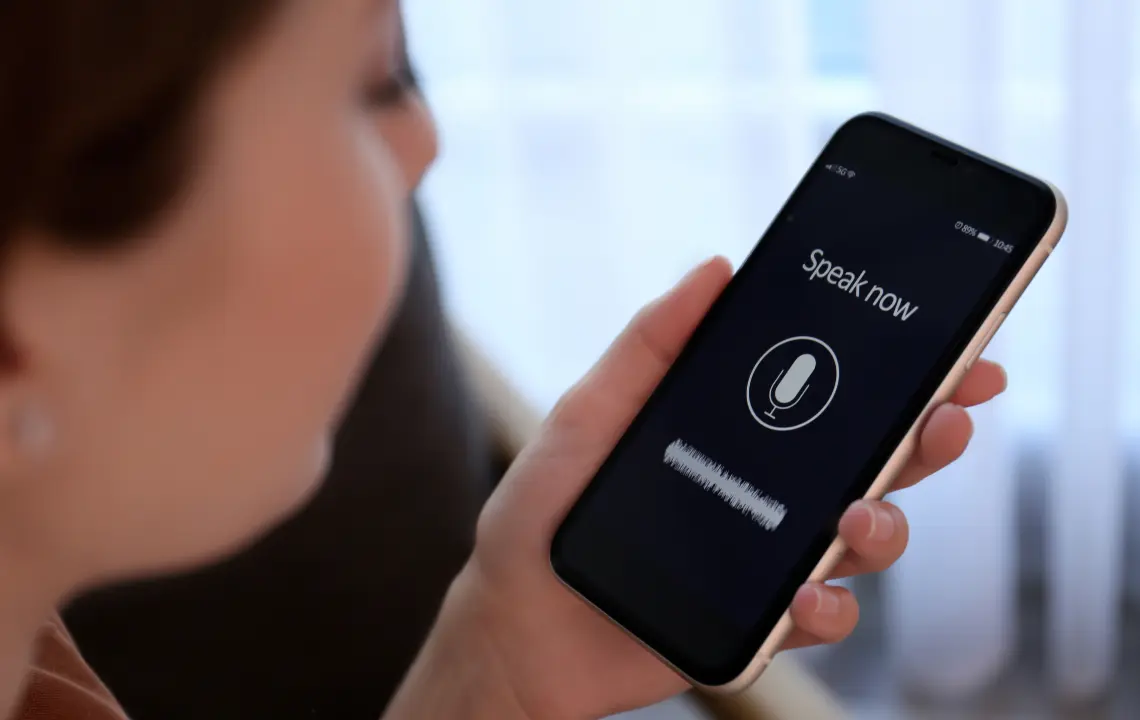
How to Build an AI Voice Agent for Your Business : A Detailed Guide
Summarize and save time
Were you aware that the market for AI voice agents is projected to rise from USD 7.84 billion in 2025 to USD 52.62 billion by 2030, with a compound annual growth rate (CAGR) of 46.3%? Currently, 55% of companies have implemented this technology and have indicated a 55% increase in operational efficiency, along with an average cost reduction of 35%.
The growth is phenomenal, but you might wonder what an AI voice agent actually is. Then here’s your answer: an artificial intelligence (AI) voice agent is a software program that can interact with its surroundings, collect data, and leverage it to perform self-directed tasks that meet predetermined goals.
While humans set goals, AI voice agents achieve them. Unlike chatbots, AI voice agents don’t answer your questions; they ensure the job is done. They are very useful for businesses of all sizes. If you are wondering how to build an AI voice agent for your business, then you have landed on the right page.
This blog aims to teach you how an AI voice agent is built, including essential steps from data gathering to deployment. Businesses can either hire AI agent development services or build their own. In this blog, we will share a detailed guide with you for the same.
AI Voice Agent: What is It?
An AI voice agent is a conversational software program that has the capability to completely transform the touch-tone menus. AI developers combine real-time speech recognition, text-to-speech, and generative AI to build AI voice agents that can conduct human-like conversations, handle customer queries, book appointments, and qualify sales leads 24/7.
The goal of an AI voice agent is to replace the rigid phone menus with human-like dialogue, while handling multiple queries in one exchange. Their ability to offer end-to-end capability separates them from old automation. They take in speech, process the needs of the caller, remember the context from the chat history, and take the right action.
AI Voice Agent: How Do They Work?
To describe shortly, the AI voice agent works by listening, understanding natural language, and taking action through a backend system and responding to users in the most human way possible. Each voice assistant works in three core steps:
Speech-to-text:
With automatic speech recognition (ASR), spoken words are turned into written text. Different people have different ways of speaking; some might speak in their mother tongue, while others might use broken English, some might speak with background noise, different accents, and use special words. The job of the speech-to-text feature is to grasp an accurate text version of what is said.
Dialogue understanding:
Once the speech is turned into text, the system figures out the intent of the speaker and decides the right answer to respond. To reduce the frustration of users, the AI voice agent also stores and processes old conversations, so that the user doesn’t have to explain themselves every time they come after long intervals. The AI voice agent handles things like follow-up questions, corrections, or a sudden change of topic, without getting confused or losing track.
Text-to-Speech (TTS):
With text-to-speech, you can turn a written answer into spoken audio. TTS tools are built using neural networks, which let them produce voices that sound and feel natural. You can control things like tone, speed, and emphasis. This plays a crucial role in bridging the gap between natural and unnatural ways of talking.
Witness Voice AI in Action
Experience human-like conversations that go beyond IVR menus, test streaming transcription speed and accuracy on your own voice, with PSSPL.
Building a Custom Voice AI Agent for Business
An AI voice agent is built in seven steps by following each of them strategically and in a structured sequence. These systems can connect conversations, reasoning, and backend execution. Small-scale businesses can build a voice AI agent on their own, especially if they are looking for a simpler one. When you hire an AI agent development company, their AI agent development service helps businesses build AI voice agents that align with their business needs.
-
Define Objectives and Use Case
When you hire AI agent development services, the AI team ensures to assess your business needs, pain points, and goals. Once they fully understand the objectives of your business, they will build a custom AI voice agent for you. They will outline the task that the system needs to perform. While building AI voice agents, they will figure out the target audience of your business and your industry’s needs and expected outcomes.
-
Select the Right Model and Frameworks
Step two for building an AI voice agent is selecting the right model and frameworks. Top companies leverage tools like Azure, Amazon Lex, Dialogflow, and more. They also simplify the integration process by minimising the development complexity.
-
Design Conversation Flow
AI agent developers plan and strategise how the conversation should take place, from generic to complex queries. The more intuitive, user-friendly and natural the path is, the better the AI voice agent will be in enhancing user experience and reducing communication errors.
-
Implement Speech Recognition
When businesses hire the wrong and inexperienced AI voice agent development company, they will have to bear the losses of a failing AI system. The most complex process in the entire AI voice development is the building of a real-time voice pipeline ( where most systems fail if they are not designed properly).
By integrating ASR (Automatic Speech Recognition) technology, AI developers transform voice into regular text. The more emphasis is put on executing literal output, the more accurate the response will be. The QA team needs to test these AI voice agents across different accents, tones, and scenarios.
-
Develop Natural Language Understanding
NLU is a branch of AI and NLP that focuses on understanding the true intent of user queries to provide relevant responses. In addition to NLU, it is important to train the model with entities, contextual information, and intents to enable the AI voice agent to manage intricate interactions effectively.
-
Integrate With Backend Systems
Instant feedback is made possible by connecting AI voice agents to databases, APIs, and CRM systems. Data retrieval, appointment scheduling, and other tasks are made possible by this integration.
-
Generate Responses
Each business is unique, and so is its brand voice and desired persona. By adding clarification prompts and a fallback mechanism for misunderstood inputs. It is also crucial to have a consistent personality to gain users’ trust.
-
Deploy and Monitor Performance
An experienced and leading AI voice agent development services provider deploys the AI voice agent across various platforms, including Amazon Alexa, Bixby, and HomePod. After successful deployment, they also monitor the performance of the agent, how it interacts with users, and gather feedback to improve its functionality.
3 Main Types of AI Voice Agents
(1) Rule-Based Voice Agents:
The rule-based voice agents work through predetermined instructions, and programmed functions are executed by them exclusively without deviation. Whenever users ask questions, the system responds with prewritten answers; there is no scope for learning or adaptation.
For example, an e-commerce voice assistant uses pre-made response templates to answer questions about return policies or order tracking. Keyword identification, automatic speech recognition (ASR) and simple decision trees are examples of core technologies used.
Businesses in industries that handle simple, high-volume interactions, such as utilities, financial services, insurance, and e-commerce, often manage recurring customer questions.
(2) AI- Assisted Voice Agents:
The AI-assisted voice agents go beyond simple rule systems; they process natural language, maintain relevance with contextual awareness, and accommodate varied speech patterns to deliver enhanced efficiency. However, they are not fully conversational, but they do provide fluid interactions with elementary personalisation capabilities.
For example, if a user inquires about the weather, and then asks another question about the weather the next day, the AI voice agent will be able to maintain relevance in its answer without the need for clarification.
The key technologies used to build AI-assisted voice agents are contextual memory, intent classification, and natural language processing (NLP). These types of voice agents are best used for an organisation wanting to improve its customer experiences, without a comprehensive conversational AI implementation.
(3) Conversational Voice Agents
Conversational voice agents are known for their ability to hold real human conversations. They pick up on things like how someone sounds, what they mean to say, and how they are feeling, helping them to respond naturally. They handle tasks by running through complicated jobs that need many steps, without breaking the flow.
For example, the agent can change a delivery date, make sure the changes are saved, and then ask any extra questions needed, all in one smooth chat. The key technology used by conversational voice agents is large language models, short-or long-term memory, and the back-and-forth of a conversation.
Businesses that care about offering a high-quality and personalised experience to their customers can leverage conversational voice agents. Industries such as healthcare, hotels, banking, and travel utilise intelligent conversational agents.
Industries leveraging AI voice agents to reshape how they interact with customers:
- Healthcare
- E-commerce
- Travel and hospitality
- Education
- Banking and finance
Business Benefits of AI Voice Agents
By integrating AI voice agents into your business, you can bring a lot of benefits that will not only upscale your customer services but will also help in improving operational efficiency.
- 24/7 real-time support: Your customer representatives have dedicated shift timings, but your customers don’t; they want assistance as per their convenience.
- Reduce wait time and enhance customer service: With AI voice agents, you can give fast answers and guide customers towards the right help. This reduces wait time and improves the quality of customer service for a smooth experience.
- Seamless Integration: AI developers have the ability to effortlessly connect AI voice agents to your current systems, enabling you to gain a comprehensive perspective on customer interactions.
- Personalised interactions: Save the customers’ time and energy from repeating their queries, concerns, and requests every time they are assigned to a different customer representative. AI voice agents have a memory of past interactions, which helps them to craft answers based on them.
Wrap It Up
AI voice agents are no longer just a future trend; they are becoming a practical business tool for companies that want faster support, better customer experiences, and smarter operations.
Whether you choose to build one in-house or work with AI agent development services, the key is to start with a clear use case, the right technology stack, and a focus on seamless user interactions. As businesses continue to adopt automation, AI voice agents will play an even bigger role in turning everyday conversations into efficient, personalised, and value-driven experiences.
Through my experience managing content in a variety of B2B and B2C programs, I’ve learned a few things about the content pieces that actually work – they’re technically correct, they answer the questions the user came to ask, and they were crafted with being discovered in mind. Writing something polished isn’t difficult – there are lots of people out there who know how to do that. The difficult part is aligning it with actual intent, ensuring all facts are correct, and ensuring that the piece fits into a larger story. Many content programs forget about this, and that’s where I concentrate.